About Lifted

Exploring how policy, practice, and power shape the care system and childhood adversity.
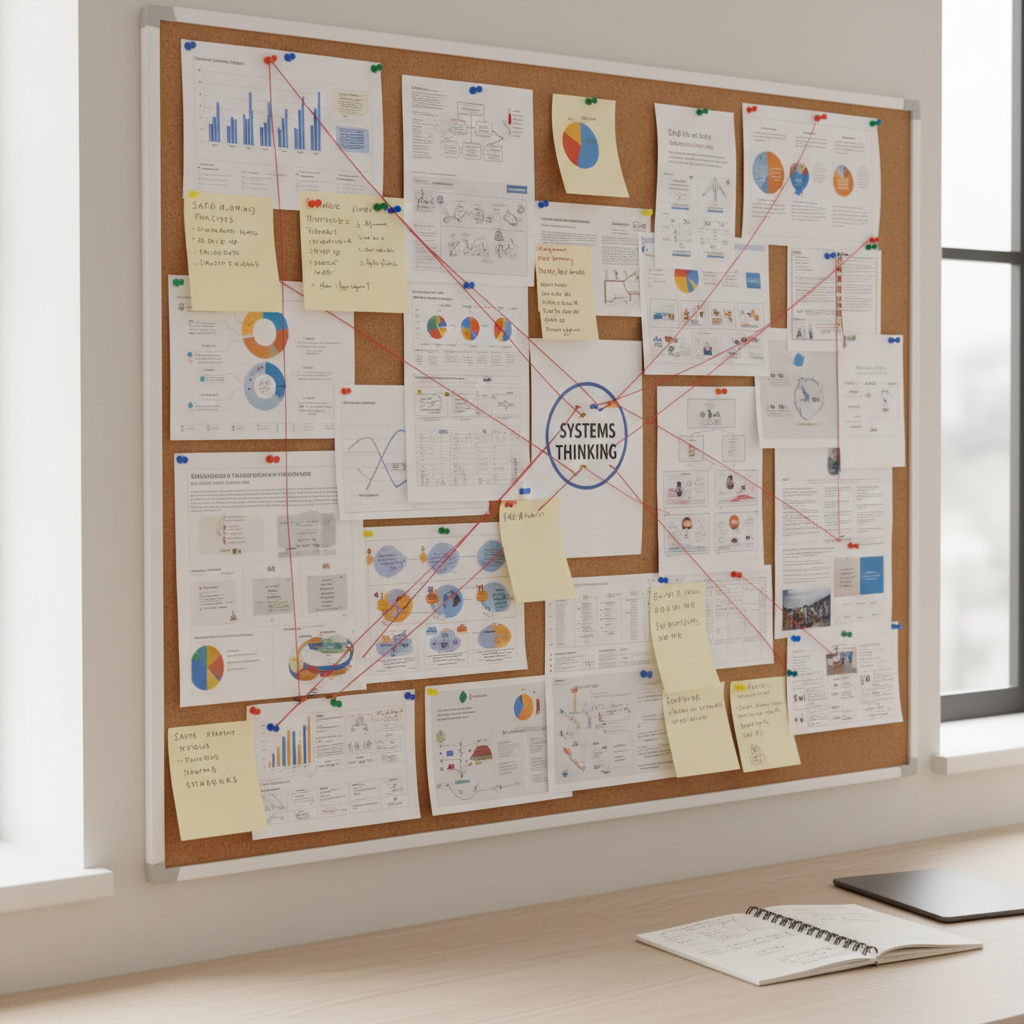
A large cork noticeboard covered with carefully arranged printed charts, social policy infographics, and handwritten notes on safeguarding and ACEs, each pinned with colored pushpins in a deliberate pattern. Thin red string connects key documents, suggesting relationships and systems thinking. The board hangs on a matte, off-white wall above a clean, uncluttered work surface holding a single spiral notebook and a closed tablet. Soft overcast window light enters from the left, producing even, shadowless illumination that enhances legibility without glare. Shot from a slightly angled, three-quarter perspective with moderate depth of field, the photographic image feels analytical yet accessible, conveying a methodical, evidence-based approach to understanding the care system.
A neatly stacked pile of well-worn policy reports and ring-bound care system briefings on a pale oak desk, each cover labeled with clear, sober typography in muted blues and greys. Beside them lies a closed laptop with a brushed aluminum finish and a slim fountain pen resting precisely parallel to the stack. The scene is set in a minimalist office with soft, neutral walls and an out-of-focus bookshelf holding organized binders in the background. Gentle daylight from a nearby window creates diffused, natural illumination, casting calm, elongated shadows. Photographed at eye level using a shallow depth of field, the composition feels orderly, professional, and reflective, with photographic realism suited to a serious social policy blog homepage.

Why Lifted Ground Exists

Lifted Ground centres people affected by the care system and ACEs, pairing rigorous policy analysis with compassionate storytelling. We prioritise consent, anonymity, and shared ownership, ensuring stories inform change without exploiting trauma.

Our Team

A large cork noticeboard covered with carefully arranged printed charts, social policy infographics, and handwritten notes on safeguarding and ACEs, each pinned with colored pushpins in a deliberate pattern. Thin red string connects key documents, suggesting relationships and systems thinking. The board hangs on a matte, off-white wall above a clean, uncluttered work surface holding a single spiral notebook and a closed tablet. Soft overcast window light enters from the left, producing even, shadowless illumination that enhances legibility without glare. Shot from a slightly angled, three-quarter perspective with moderate depth of field, the photographic image feels analytical yet accessible, conveying a methodical, evidence-based approach to understanding the care system.

Aarav Sharma

CEO

Editors grounded in social work and research, translating care-system complexity into clear, humane analysis.

A neatly stacked pile of well-worn policy reports and ring-bound care system briefings on a pale oak desk, each cover labeled with clear, sober typography in muted blues and greys. Beside them lies a closed laptop with a brushed aluminum finish and a slim fountain pen resting precisely parallel to the stack. The scene is set in a minimalist office with soft, neutral walls and an out-of-focus bookshelf holding organized binders in the background. Gentle daylight from a nearby window creates diffused, natural illumination, casting calm, elongated shadows. Photographed at eye level using a shallow depth of field, the composition feels orderly, professional, and reflective, with photographic realism suited to a serious social policy blog homepage.

Mateo García

CTO

Advisors with policy, legal, and safeguarding expertise ensure accuracy, balance, and real-world relevance.

A large cork noticeboard covered with carefully arranged printed charts, social policy infographics, and handwritten notes on safeguarding and ACEs, each pinned with colored pushpins in a deliberate pattern. Thin red string connects key documents, suggesting relationships and systems thinking. The board hangs on a matte, off-white wall above a clean, uncluttered work surface holding a single spiral notebook and a closed tablet. Soft overcast window light enters from the left, producing even, shadowless illumination that enhances legibility without glare. Shot from a slightly angled, three-quarter perspective with moderate depth of field, the photographic image feels analytical yet accessible, conveying a methodical, evidence-based approach to understanding the care system.

Zuri Ndlovu

Engineer

Contributors with lived experience of care and ACEs steer narratives, language, and priorities from within.

A neatly stacked pile of well-worn policy reports and ring-bound care system briefings on a pale oak desk, each cover labeled with clear, sober typography in muted blues and greys. Beside them lies a closed laptop with a brushed aluminum finish and a slim fountain pen resting precisely parallel to the stack. The scene is set in a minimalist office with soft, neutral walls and an out-of-focus bookshelf holding organized binders in the background. Gentle daylight from a nearby window creates diffused, natural illumination, casting calm, elongated shadows. Photographed at eye level using a shallow depth of field, the composition feels orderly, professional, and reflective, with photographic realism suited to a serious social policy blog homepage.

Leila Haddad

Designer

Youth voices and community organisers challenge assumptions, spotlight solutions, and keep our work accountable.